

Electrical safety on the farm
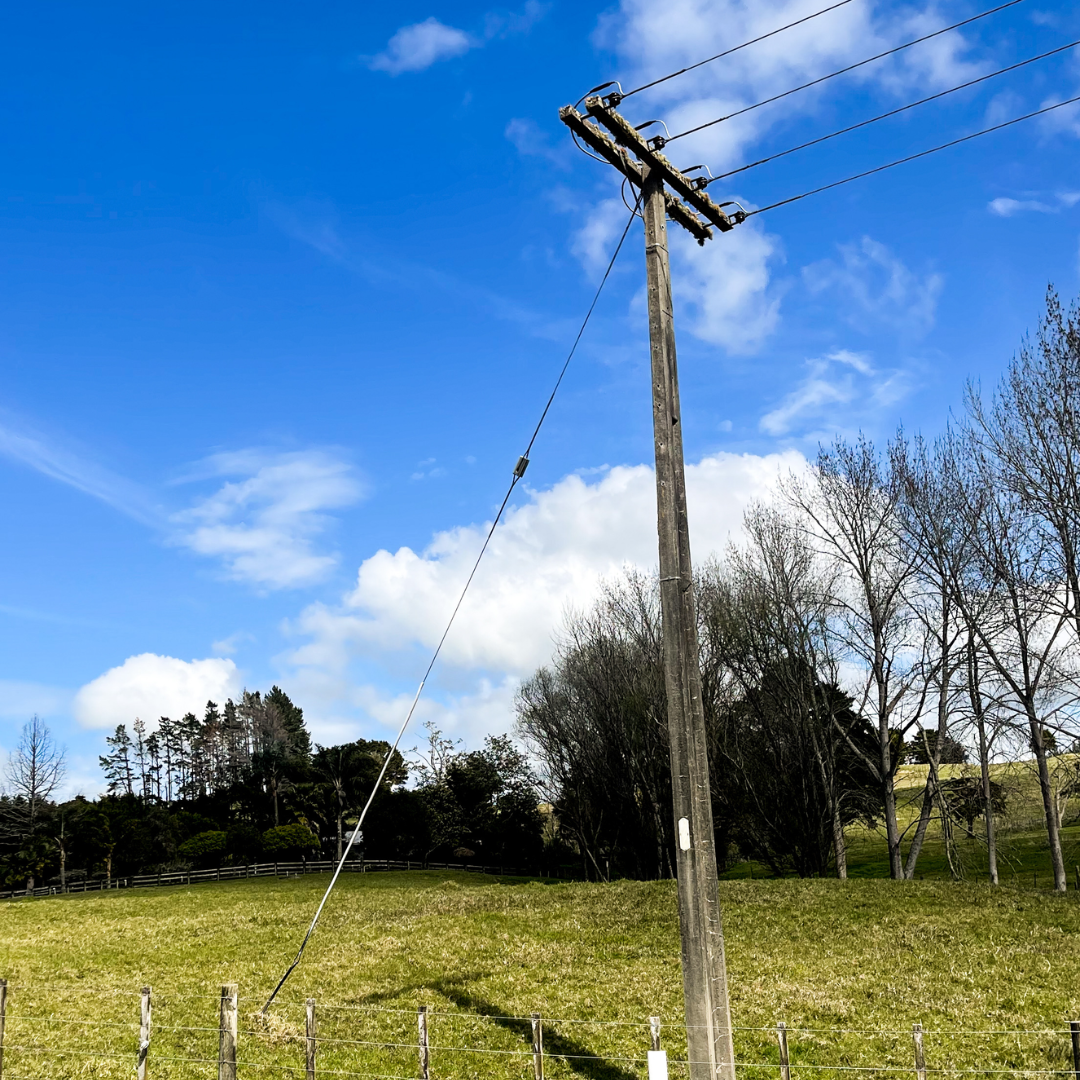
Check guy wires are undamaged
Guy wires help support power poles on your property. If they’re damaged or missing an insulator, they can carry live electricity, making them very dangerous.
It’s important that guy wires:
- Have an insulator on them
- Are well anchored, intact and not compromised by severe rust
- Wires are tight, with no slack
If something doesn’t look right, call us on 0800 10 40 40.
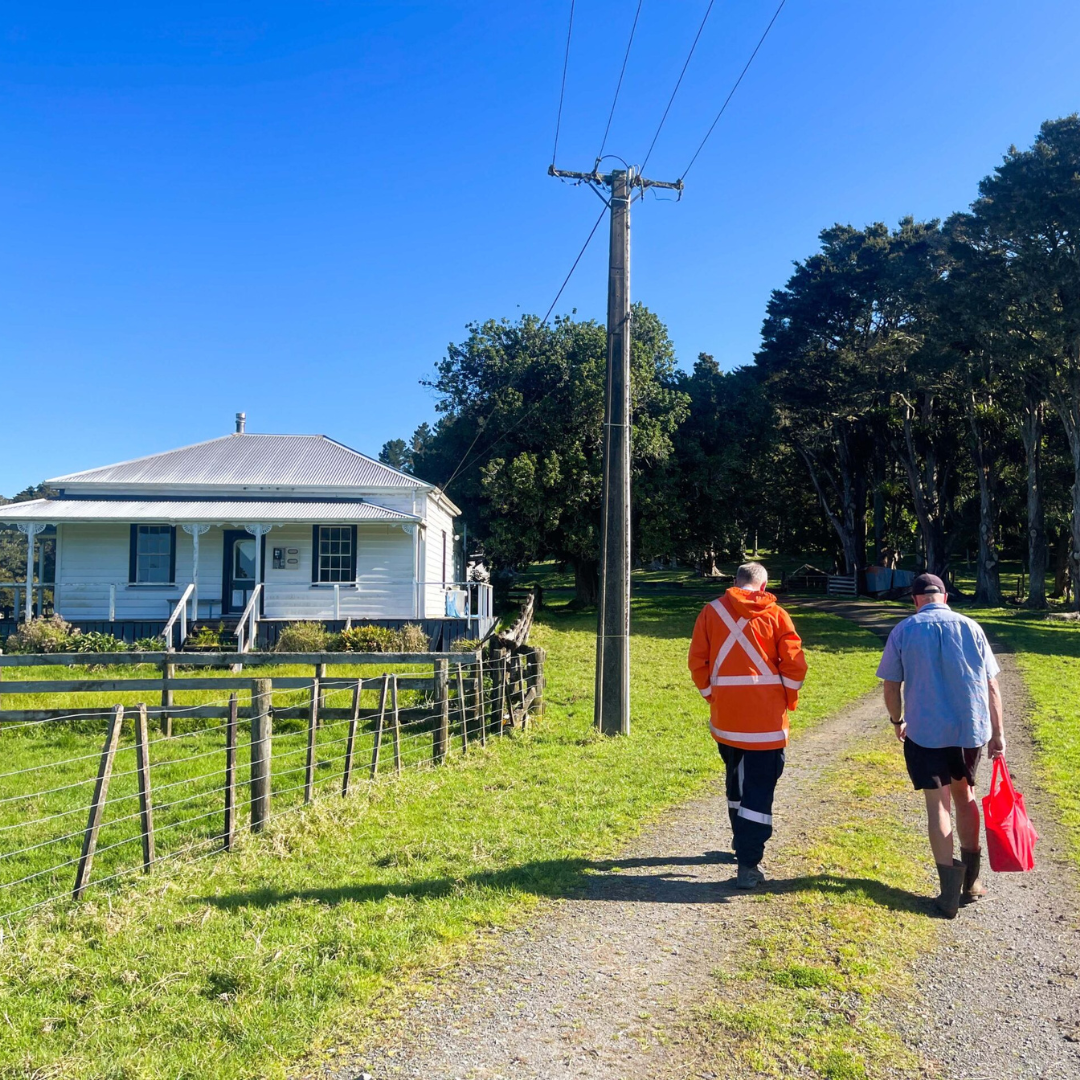
Check your service lines are well maintained
Service lines connect your home, sharemilker houses and other buildings, like dairy and utility sheds, to Northpower’s network.
Look out for:
- Leaning poles
- Sagging or frayed wires
- Rotten wooden crossarms or pole bases
- Trees or branches growing too close
- Old or worn wiring where the line enters your house
If something doesn’t look right, call Northpower.
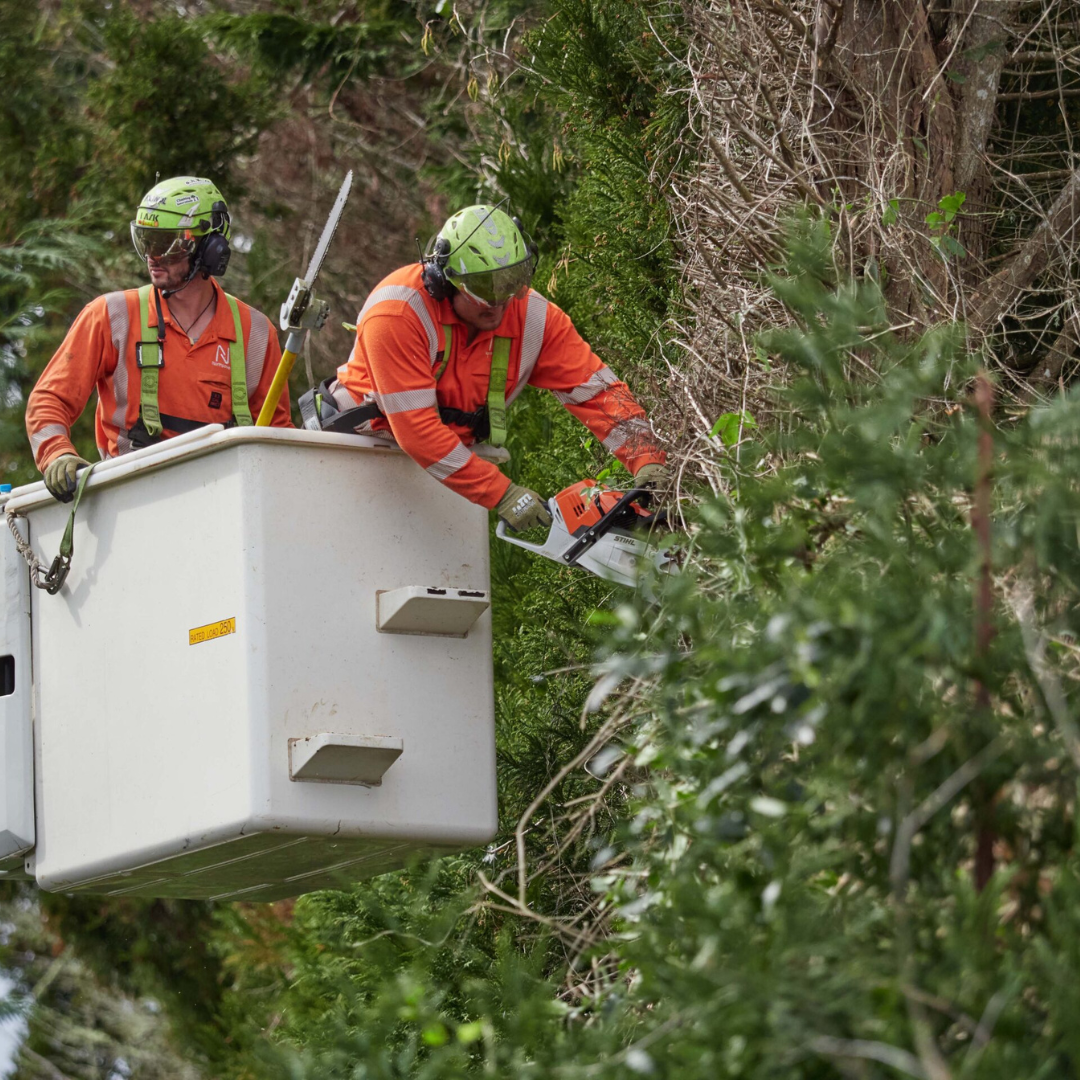
Keep trees clear of power lines
Overgrown trees and vegetation encroaching on lines can damage your connection, cause outages, or start fires on your property.
Look out for:
- Rotten or unstable trees near power lines
- Trees or branches growing within 4 metres of any power line
If trees on your property are getting close to your service line, you need to manage them. Contact us first, and we can temporarily disconnect your power for free. Never attempt to trim trees within 4 metres of any power line – always use an approved contractor.

Digging? Visit beforeudig.co.nz
Power cables can be buried at varying depths, from just under the surface to over 1.2 metres deep.
Before you dig:
- Visit beforeudig.co.nz and request reference maps of underground cables
- Carry out a cable location if your worksite is within 10 metres of underground cables (contact Northpower for a cable locate)
- For urgent work or requests outside normal hours, fault-finding on private service lines is available as a chargeable service
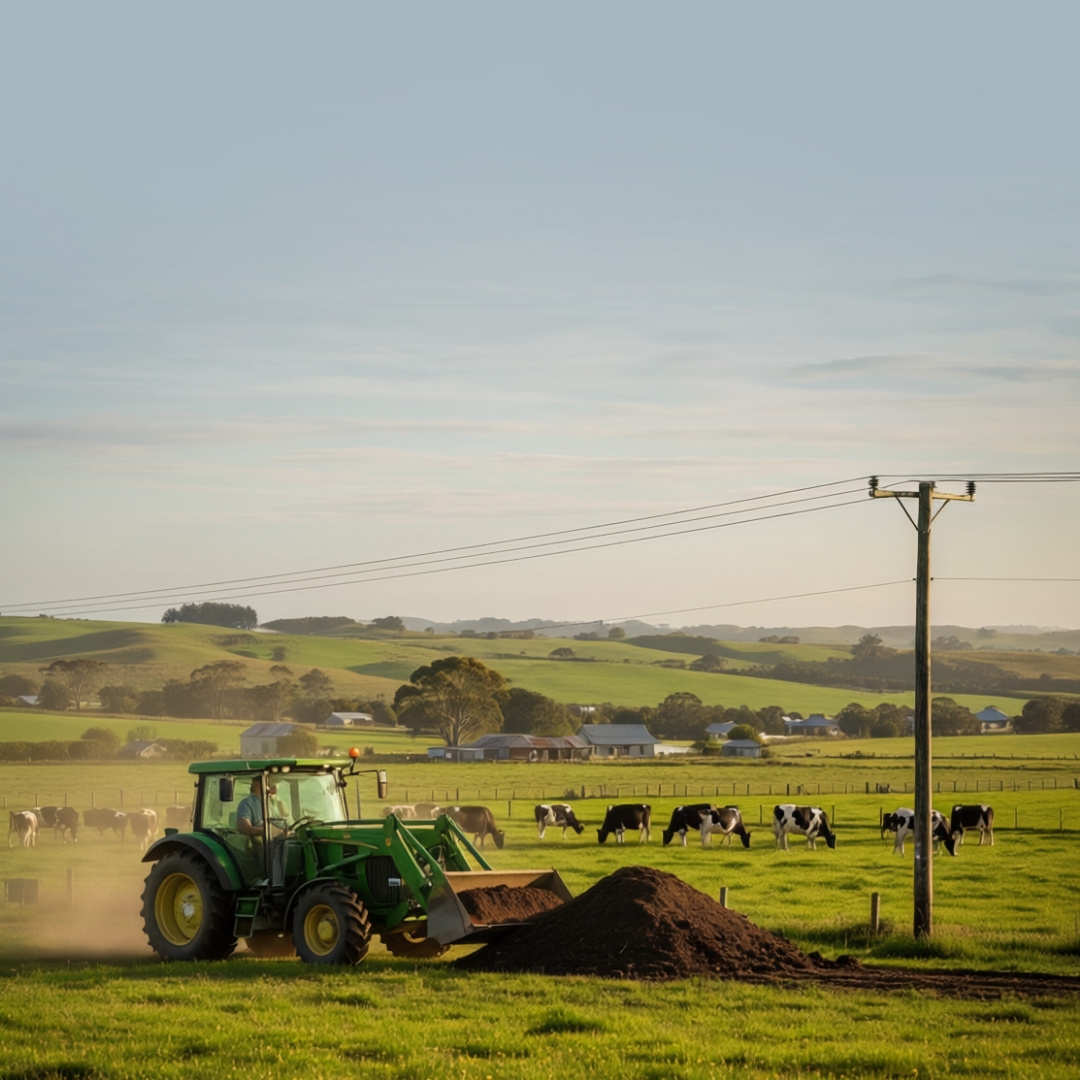
Always lower machinery to avoid overhead lines
If machinery makes contact with – or gets too close to – an overhead line, there’s a serious risk of electrocution, explosion, flashover or fire.
Keep safe:
- Keep machinery at least 4 metres away from overhead power lines at all times
- Always have lifting equipment, including crane arms, tipper trailers and spray booms, in a fully lowered position before moving under or near power lines
- Assign a person to watch for clearance when operating large machinery near lines
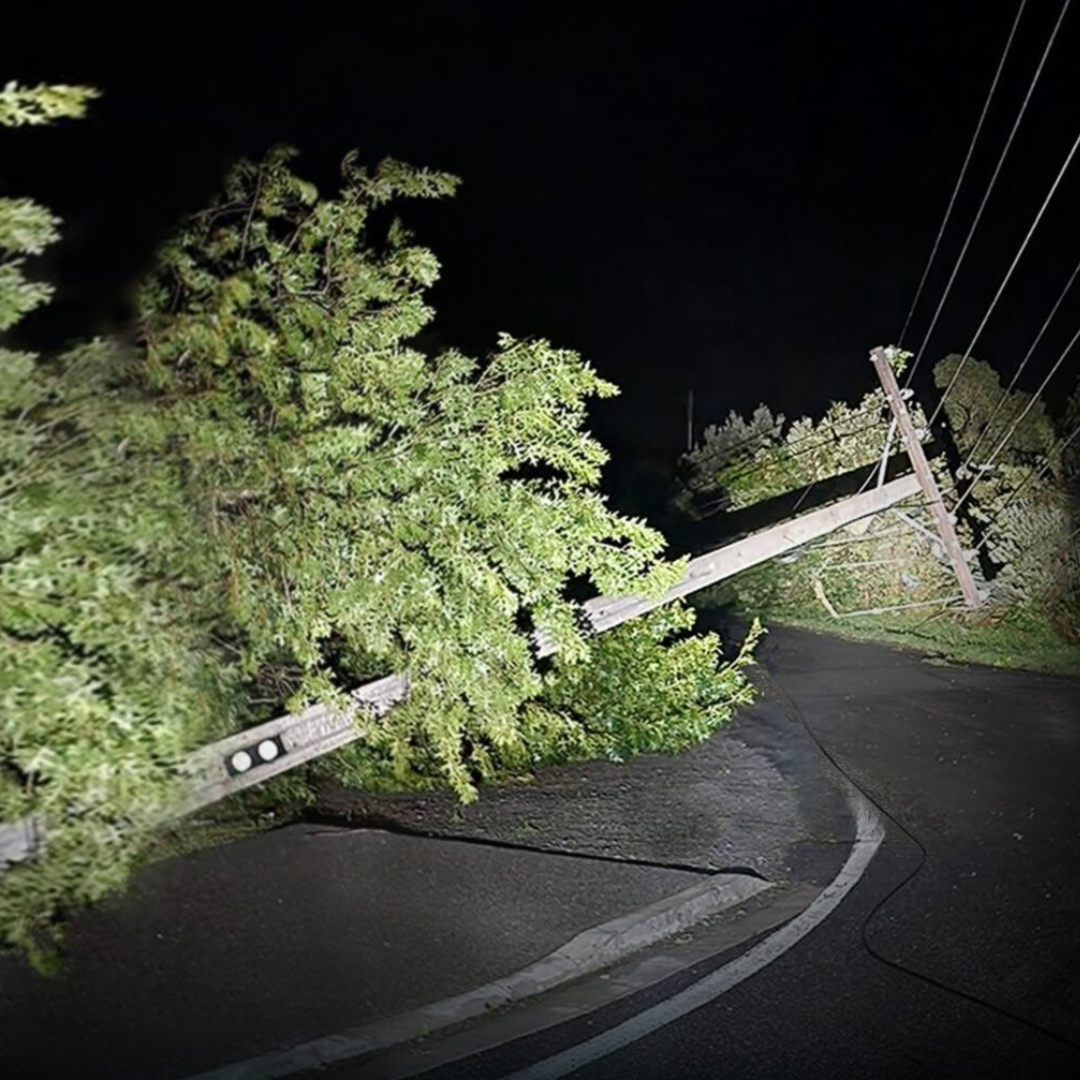
Fallen power lines? Treat as live and call us
Fallen power lines on your property?
- Call 0800 10 40 40 or 111 immediately
- Keep everyone and animals at least 10 metres away
- Treat all lines as live until advised by Northpower
- Never attempt to touch or move a fallen line or objects near it
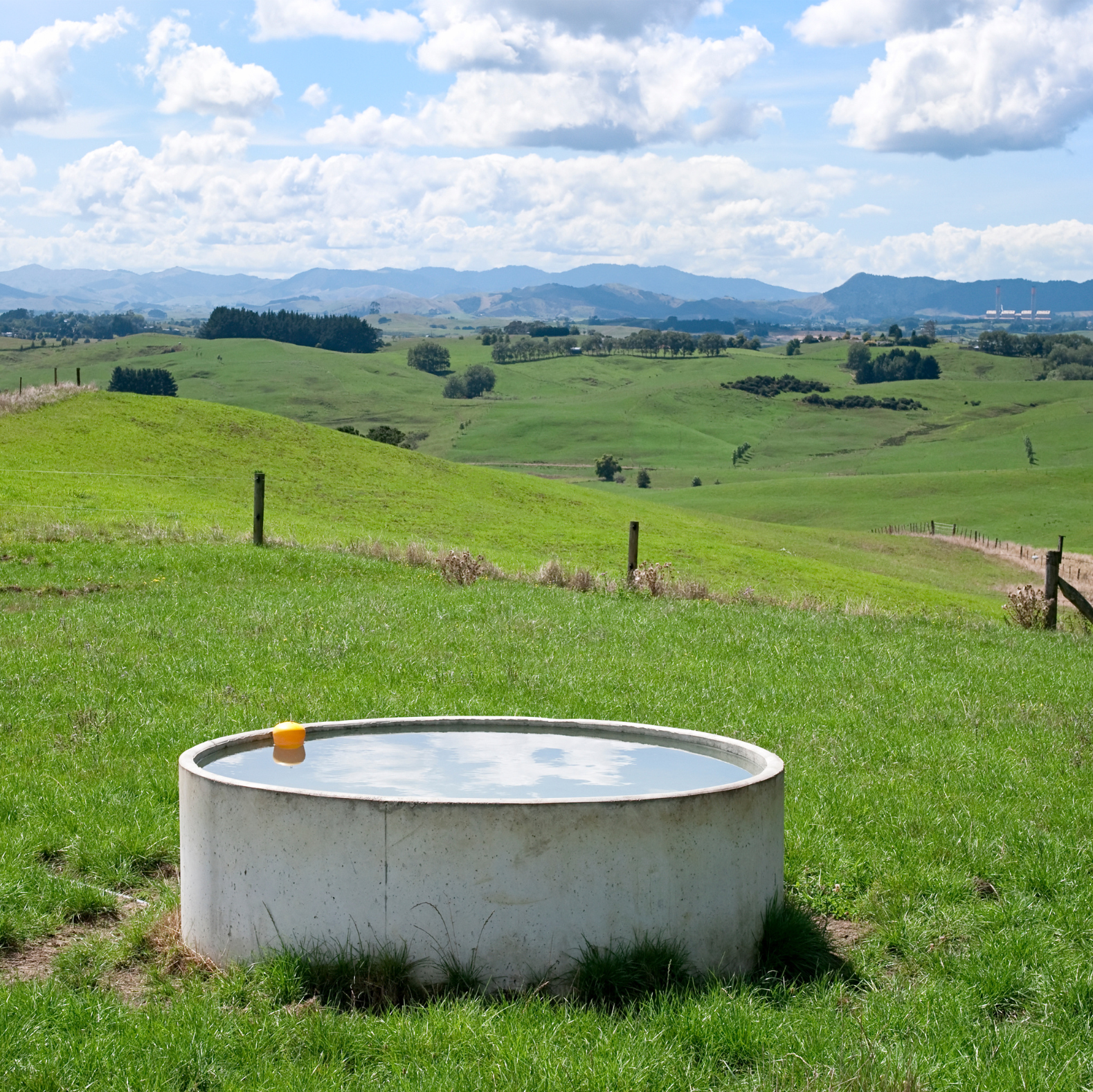
Check for water leaks around electrical equipment
Water near electrical equipment and wiring presents a serious safety hazard. Regular checks in dairy sheds, utility buildings and pump houses are important to avoid damage.
Look out for:
- Roof leaks, blocked drains, flooding and rusty or burst pipes
- Pipes running above electrical conduit or junction boxes
- Unusually soft ground or puddles near underground power cable paths
Explore our Advice Hub
Our Advice Hub includes a wide range of information to help keep you safe at home, around our network, and during power outages. You can also find great power saving tips and learn more about renewable energy.
